SHOTS

Establishing shot: An establishing shot in film and television sets up, or establishes the context for a scene by showing the relationship between its important figures and objects.

Master shot: A master shot is a film recording of an entire dramatized scene, from start to finish, from an angle that keeps all the players in view.

Close-up: A photograph, movie, or video taken at close range and showing the subject on a large scale.

Mid shot: Shot which in effect is about midway between a close-up and a long shot.

Long Shot: A shot including objects at a distance

Wide shot: Shot which covers the action of the scene in a wide or panoramic view.
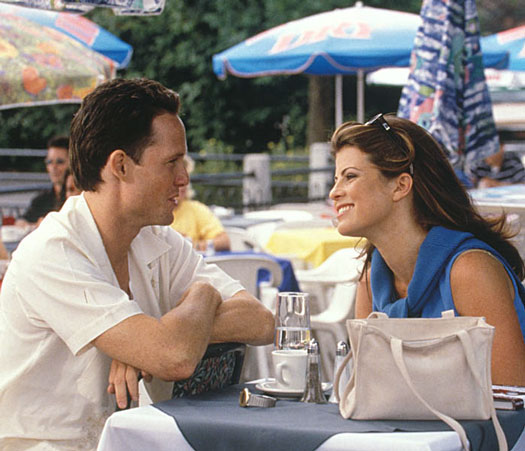
Two-shot: A movie or television shot of two people together.

Aerial shot: An extremely high angle view of a subject usually taken from a crane or a high stationary camera position, but may also refer to a shot taken from an actual airplane or helicopter.

POV shot: A point of view shot is a short film scene that shows what a character is looking at.

Over the shoulder shot: An over the shoulder shot is a shot of someone or something taken over the shoulder of another person.
-------------------------------------------------------------------------------------------------------------------------------------------------------------------
ANGLE

High angle: In film, a high angle shot is usually when the camera is located above the eyeline.

Low angle: A shot taken from a low position looking upwards, often using a wide-angle lens to exaggerate perspective.

Canted angle: A view of a scene that is tilted off center. This is often used to indicate something is amiss.
MOVEMENT

Pan: a shot that is made from a camera pivoting horizontally from a fixed axis, usually a tripod.
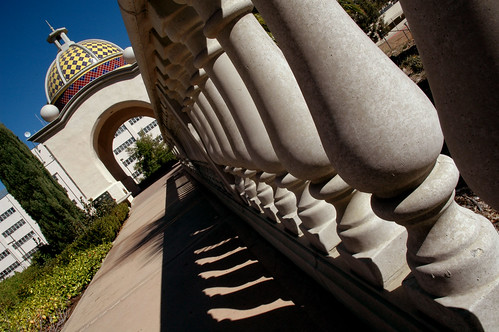
Tilt: A shot taken by angling a stationary camera up (tilt-up) or down (tilt-down).

Track/dolly: Any shot made from a moving dolly. These may also be called tracking or traveling shots.

Crane: A shot in which the camera is mounted on a crane to achieve striking height or aerial movement.

Zoom: Shot which moves closer to, or away from, the subject using the lens rather than moving the whole camera in or out. A reverse zoom is when the camera moves further away from the subject.
COMPOSITION

Depth of field (shallow): The object at the front of the image is in focus where as the object at the back (or background) is out of focus (blurred).

Depth of focus (deep): where the oject in the back of the photo is more focused then the objects at the front.

No comments:
Post a Comment