Friday, 30 September 2011

Hustle extract analysis


In the clip from hustle gender is represented conforming to stereotypes showing men as more powerful and calm and showing women as lower and trouble makers.
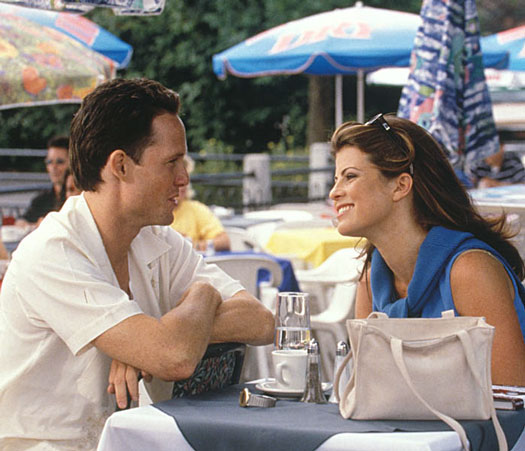
Laura Mulvey’s theory of the male gaze is one of the strong media elements which are used prominently within the clip once the second (blonde) woman enters the scene. This woman within the scene represents the male gaze as its strongest showing her as attractive, young and stereotypically blonde as well as being well spoken, showin she is wealthy and probably had a good education. The woman is shown to be extremely flexible about using her husband’s money (she wasn’t fazed by the price of the dress), showing of expensive jewellery and telling everyone about her husband’s wealth causing the audience to perceive this character to follow with a stereotype of woman not working and needing men in their life, further implied after she loses the ring and says “her husband is going to kill her” proving he has authority over her. The shop assistant also enhanced the idea of the male gaze within this clip as he (although his sexuality is called into question using his job, voice and appearance to exaggerated  this) shows her skin tight, short revealing dresses for what comes across as being for his own amusement. He also is shown to be taller than her, using camera angles to enhance the idea of him looking down upon her when she is trying on the dresses showing that she is an object to be looked rather than the intelligent person she is revealed to be at the end. Mise en scene is a very important part of this clip, as it makes the audience automatically know who is who within the scene. Mise en scene makes it obvious that when the first woman enter the scene, that she is poorer, wearing darker clothes, being older and covering up her body. The main section of the scene in which mise en scene is important is when it shows the men in their club. These men are only shown briefly in short sections throughout the clip therefore mise en scene is the main way in which to show the audience what is happening and who these men are. When we see the men, they are all dressed smart (suits, expensive watches and neat hair styles) and are in a mansion like environment (expensive looking furniture and surroundings) which immediately gives the impression of wealth and power, further implied by when they start drinking out of crystal whiskey glasses. The darkened lighting within this part of the clip also gives the impression of them being calm and mysterious and sets the overall feeling of that section of the clip.

When the blonde woman is first introduced into the scene, the camera focuses in on the ring using an eye-line match to emphasize that this will be an important object of the clip. This eye-line match also works in with the previous part of the clip as it shows a visible binary opposition (Levi Strauss, 1969) with the poorer woman previously shown in the clip. The poorer woman is represented as being lower when she is shown by many things, such as her clothing and attitude in the shop (looking confused as she walks in, being shy towards the shop assistant) and also by the camera angle when the blonde woman walks in the background she is higher up then her despite being in the background and out of focus. Camera angles are also used to emphasize a point when the man walks into the shop using a panning shot to show that he is wearing an expensive suit and that he is a person of importance within the clip. This camera movement also shows the male takeover of the scene, the man taking over the previously predominantly female scene. Another way in which the scene shows the male takeover is the transitions between scenes, normally using a whip effect coving the female scene with the male scene.

Sound is also another important part within the clip, especially the use of direct mode of address, breaking the forth wall within the clip which is unusual for a TV Drama as it is controversial, some people don’t like it as it ruined the realistic  feel of the Drama. Another way sound is used is as a part of the Mise en scene of the shop assistant adding to his impression of not being stereotypically male, making him have a higher voice which added to the overall effect (working in a dress shop, wearing tight fitting suits etc).

Overall, all of these add to the final effect of the scene showing woman as weaker compared to the strong, powerful, relaxed, rich looked men in their club. It shows the woman as lower using camera angles, different voices and sounds, how they dress and how the camera looks at them to give the effect of them (especially the blonde woman) needing men within there lives.

Media terminologys

Binary Oppositions (Levi Strauss, 1969):
Examples
Day/Night
Hot/Cold
Woman using sexuality to get what she wants/ Man using his brain to get what he wants

Voyeur
Watching for pleasure

The Male Gaze (Laura Mulvey, 1973)
How women are made to act/dress for men's pleasure.

Extract: Hustle

Camera Angles:
- When man walks into shop the camera pans over him, showing all of him, making you notice him straight way were as when the woman is first introduced it shows her in the background meaning you might not notice her. Gender representation.


Editting:
- Transitions between scenes, wipe transition showing the man being more powerful (male scene taking over female scene)
- Eye line match on the ring at the beginning


Sound:
- Direct mode of address (breaking the forth wall), getting the audience involved and making them feel like they're in on the hustle.
- Woman has very pronounce English, show she is successful and wealthy

- Shop assistant has a higher voice to show he isn't a stereotypical man


Mise en scene:
- Shop location/Bar location (relaxed, talk, expensive, for higher classes)
- Darker light in the mans shot
- Blonde woman, expensive clothes and jewellery
- All the men were wearing suits, crystal glasses


Woman: Stereotypical, worrying about jewellery, clothes and hair. Spending her husbands money (she isn't successful, he is). Pretty. Mentions husband being angry at her when she loses the ring, showing husband is higher up then her in there relationship. Being used at the end of the scene.

Shop assistant: Not a stereotypical man. Camp. Works in a expensive dress shop.

Monday, 26 September 2011

Homework: Feminism and The Male Gaze


None Stereotypical Female
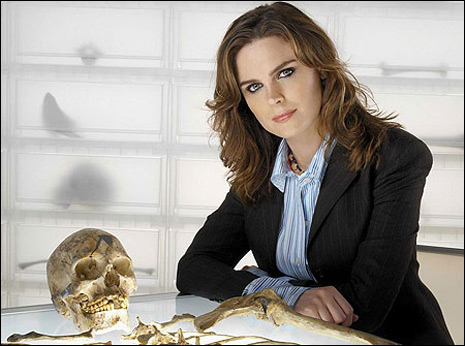
Temperance Brennan Picture
Temperance Brennan is the lead women in the crime-based TV drama Bones. She is a highly intelligent woman who works with a male parter on crime scenes. The majority of the time she telling him what to do or working out the answers to murder cases making her a strong character in the TV show. She always wears suits, which aren't skin-tight or in any way provocative, she never has relationships and never mentions any trouble with relationships and is always focused on her job.


None Stereotypical Male
Simon Bellamy is one of the main characters from teen drama Misfits. Although he is a male lead role (as well as two other males and two females) he is very quiet and shy. He isn't portrayed as being strong, talkative or even intelligent within the shows and often makes mistakes. He isn't muscular (or at least he doesn't show it) and is generally never successful in idea making, helping and sorting out general issues the group come across.


Stereotypical Male 
Dexter Morgan is from the crime-based drama Dexter. He is a stereotypical male lead character being he is clever, strong and protective within the program. He is good looking, physically strong looking and his intelligence is portrayed very well using work, lifestyle and family life. Not only this but within the program, he is a typical man as well, with a wife who looks after his children when he goes out and works.


Stereotypical Female

Gabrielle Solis is one of the lead female characters in TV drama Desperate Housewives. She is a very typical female character in TV due to her stereotypical good looks, lake of intelligence and relationship issues. They have also made her a housewife who stays at home and doesn't work any more however they've incorporated the normal sex appeal into her character by making her a ex model. 

Friday, 23 September 2011

Question when analyzing media texts

  • Who produced it?
  • What/who is represented in the text?
  • How is it being represented?
  • Why was this particular representation selected and what are the alternatives?
  • What frame of reference does the audience use when understanding the  representation?

Audience Reception Theories

Stuart Hall (1950's- The encoding and decoding theory)

The encoding and decoding theory: Media create a message which we then decode mentally. They want us to read these messages in a "prefurred reading" meaning to believe there view or point, there version of the message they are putting ascross.

Representation

Masculine and Feminine characteristics


Masculine
Descripions: Rude, Derogatory, Shallow, Immature, Romantic, Jealous, Friendly, Competitive, Vulger, Safe

Masculine
Objects: Sport, X-box, Beer, Money, Builder, Tea, Army, BBQ, Fry-ups, DIY

Feminine
Discriptions: Bitchy, Talkative, Annoying, Social , Hopeless romantics, Loving, Mature, Delicate, Considerate, Creative

Feminine
Objects: Success, Business, Children, Romance, Cocktail, Coffee, Fashion, Cigarettes, Chick-flicks, Diets
___________________________________________________________________________________________

Representation in the Media: By definition, all media texts are re-presentations of reality. This means that they are intentionally composed, lit, written, framed, cropped, captioned, branded, targeted and censored by their producers, and that they are entirely artificial versions of the reality we perceive around us. When studying the media it is vital to remember this - every media form, from a home video to a glossy magazine, is a representation of someone's concept of existence, codified into a series of signs and symbols which can be read by an audience. However, it is important to note that without the media, our perception of reality would be very limited, and that we, as an audience, need these artificial texts to mediate our view of the world, in other words we need the media to make sense of reality. Therefore representation is a fluid, two-way process: producers position a text somewhere in relation to reality and audiences assess a text on its relationship to reality.

Monday, 19 September 2011

Production Rules

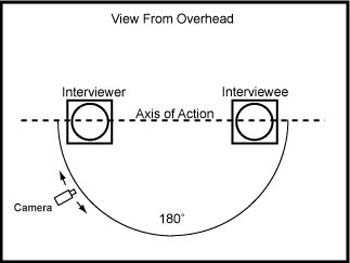
180 Degree rule: When recording a conversation between two people, only stay on one half of the people otherwise the camera may show the two people looking the same direction during a conversation which will be confusing for the viewer.


Match on action: if  in one shot a person is about to open a door or has half opened a door, in the next shot you must make sure the door is in the same postion as it was before otherwise the fiilm will look jumpy. This is the same with any type of action on film e.g. walking, movement, getting something out a pocket etc.

Continuity editting: Making sure the props, how the people look and the surroundings in each shot are the same. if you film on one day and it's stormy and the next time you film it is sunny this would not be suitable as it would look out of place and wrong on film.


Short reverse shot: Looking over the shoulder of one person, moving to over the shoulder of the other person then moving back to the original person.

TV Dramas

 
Drama
Genre
Channel
Time
Narrative
CSI
Crime
Channel 5
9:00 PM
Looking into a CSI team researching murders and trying to catch the culprit.
True Blood
Ski-Fi
Channel 4
11:00 PM
Vampire and supernatural girlfriend coming across obstacles.
Six Feet Under
Drama
Channel 4
9:00 PM
Looking into funeral directors jobs and obstacles.
Desperate Housewives
Romantic Comedy
Channel 4
8;00 PM
Following the lives of a group of women and their families who live on the Wisteria Lane.
Dexter
Crime
Showtime
10:00 PM
Serial killer who works in a police station and kills other serial killers.
Skins
Teen Drama

10:00 PM
Group of teenagers who go to parties.
Misfits
Teen Drama
Channel 4
10:00 PM
Group of teenagers with superpowers living in a poor part of the UK.
Bones
Crime
ITV
9:00 PM
Crime lab looking at decaying bodies and bones to try and find out who murdered them.
Doctor Who
Ski-Fi
BBC One
7:00 PM
Man who travels through space looking at different planets and helping them.
House
Medical Drama
Sky One
8:00 PM
Doctor in a hospital trying to work out what is wrong with each patient and showing his personal life.
The Mentalist
Crime
Channel 5
10:00 PM
Psychologist helping the police tries and catches murders by looking at their body language.
Sex and the City
Romantic Comedy
Channel 4
8:00 PM
Group of women living in New York showing there relationships and lifestyles.
24
Serial drama
Sky One
10:00 PM
The story of a man trying to help the world by going against what is legal.

Friday, 16 September 2011

Storyboards


A storyboard is a sequence of pictures in order which tell a story either using the images, speech bubbles or a explaination of what is happening beneith. These are common in newspapers and comics as a form of entertainment but they can also be used for other things such as information or instructions on how to do a task.

Media Terminology

SHOTS

Establishing shot: An establishing shot in film and television sets up, or establishes the context for a scene by showing the relationship between its important figures and objects.


Master shot: A master shot is a film recording of an entire dramatized scene, from start to finish, from an angle that keeps all the players in view.


Close-up: A photograph, movie, or video taken at close range and showing the subject on a large scale.


Mid shot: Shot which in effect is about midway between a close-up and a long shot.


Long Shot: A shot including objects at a distance


Wide shot: Shot which covers the action of the scene in a wide or panoramic view.


Two-shot: A movie or television shot of two people together.


Aerial shot: An extremely high angle view of a subject usually taken from a crane or a high stationary camera position, but may also refer to a shot taken from an actual airplane or helicopter.


POV shot: A point of view shot is a short film scene that shows what a character is looking at.


Over the shoulder shot: An over the shoulder shot  is a shot of someone or something taken over the shoulder of another person.

-------------------------------------------------------------------------------------------------------------------------------------------------------------------

ANGLE

High angle: In film, a high angle shot is usually when the camera is located above the eyeline.


Low angle: A shot taken from a low position looking upwards, often using a wide-angle lens to exaggerate perspective.

Canted angle: A view of a scene that is tilted off center. This is often used to indicate something is amiss.


MOVEMENT

Pan: a shot that is made from a camera pivoting horizontally from a fixed axis, usually a tripod.

 
Tilt: A shot taken by angling a stationary camera up (tilt-up) or down (tilt-down).


Track/dolly: Any shot made from a moving dolly. These may also be called tracking or traveling shots.


Crane: A shot in which the camera is mounted on a crane to achieve striking height or aerial movement.


Zoom: Shot which moves closer to, or away from, the subject using the lens rather than moving the whole camera in or out. A reverse zoom is when the camera moves further away from the subject.


COMPOSITION

Depth of field (shallow): The object at the front of the image is in focus where as the object at the back (or background) is out of focus (blurred).


Depth of focus (deep): where the oject in the back of the photo is more focused then the objects at the front.


Wednesday, 14 September 2011

Course Outline

G322 TV Drama Exam

50% of the total AS GCE marks. 2h written paper 100 marks
This paper has two sections
  •  Section A: Candidates are requires to answer one question based on an unseen moving image extract.
  • Section B: candidated are required to answer one question from Institutions and Audiences.
-------------------------------------------------------------------------------------------------------------------------------------------------------------------

AS G321: Foundation portfolio in Media

50% of the total AS GCE marks. Coursework 100 marks.
  • This is a coursework unit where candidates produce two paired media artefacts from a series of briefs